
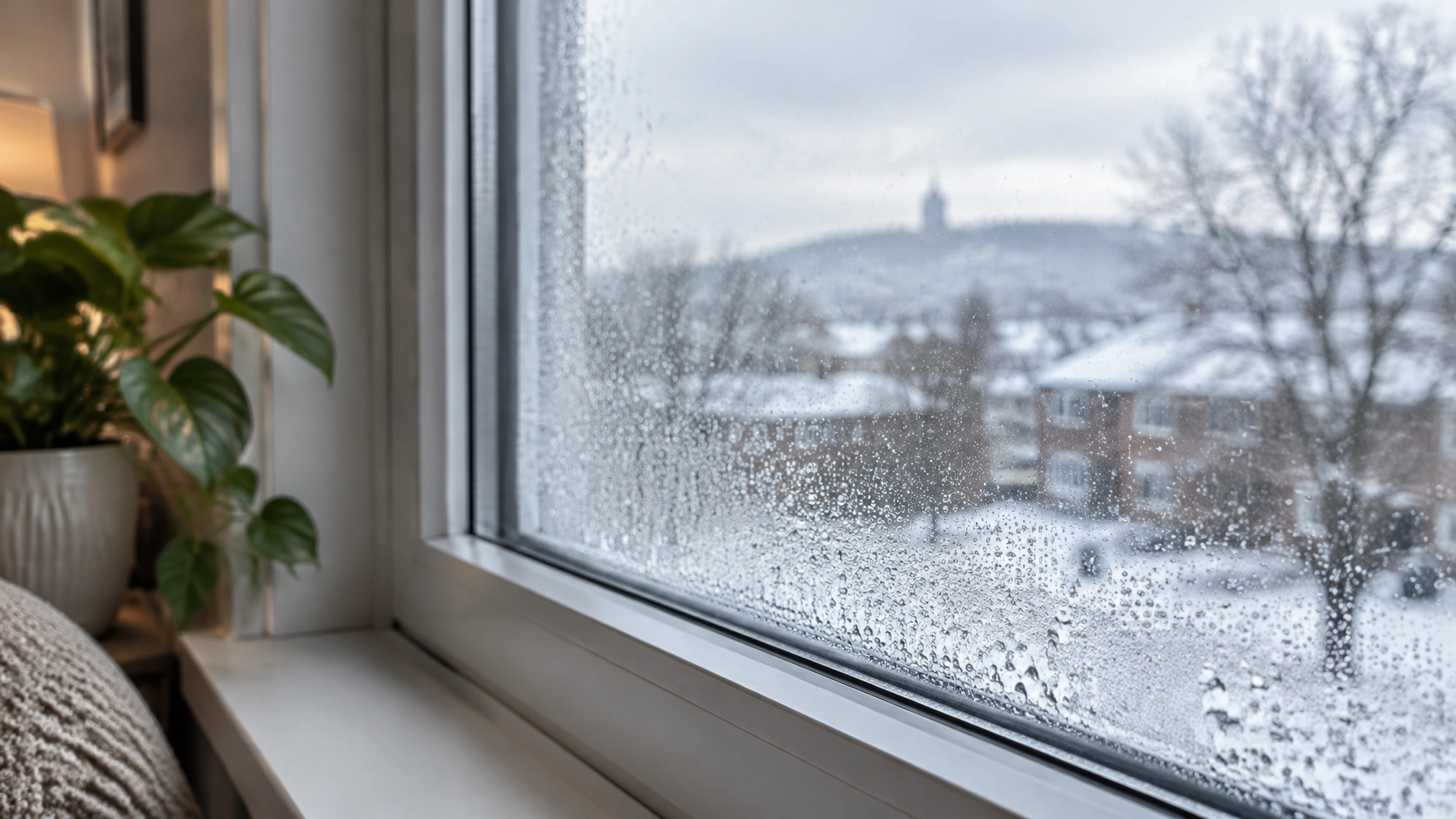
Your windows fog up overnight. By breakfast, there's water along the bottom of the glass. Does that mean the window needs replacing?
Not necessarily. Moisture you can wipe off the inside is usually condensation: warm, humid air meeting cold glass. Fog trapped between two panes is a different problem.
Before you book a cleaning or call for repairs, check where the moisture is.
First, try wiping the glass
Use a soft cloth on the inside surface. If the moisture wipes away, start with indoor humidity and airflow. If it's on the outside, it may be morning dew that clears as the glass warms.
If you can't reach the fog from either side, it may be trapped between the panes. That can point to a failed seal in the glass unit. A window professional can assess it. Cleaning the surface won't fix that seal.
Natural Resources Canada explains the difference between these types of condensation.
Why it happens when the weather turns cold
Cooking, showers and drying laundry all add moisture to the air. When that air reaches a cold window, some of the moisture turns into droplets.
Closed blinds and heavy curtains can make it worse by keeping warm room air away from the glass. You may notice more water at one window than another, even in the same room.
That doesn't automatically mean the window is damaged. But water collecting on the sill every morning is something to address.
A few things to try at home
Start with the simple checks:
- Dry the glass and sill. Don't leave water sitting against the frame while you work out the cause.
- Open the blinds or curtains. Give warm room air a chance to reach the window. Keep nearby vents and baseboards clear.
- Use kitchen and bathroom exhaust fans. They help remove moisture from cooking and showers. If you have an air exchanger, check that it's running as intended.
- Check the humidity. A small hygrometer measures moisture in the air, so you don't have to guess.
Health Canada recommends keeping indoor relative humidity below 50%. In cold weather, your home may need a lower level to keep condensation off the windows. The right setting depends on the home and its windows.
If several rooms stay damp or you're unsure how to adjust your ventilation system, ask a ventilation professional. You don't need to change the whole system based on one foggy morning.
When it needs a closer look
Get advice if fog stays between the panes, water keeps returning, or the frame starts showing damage. Soft wood, peeling paint, discolouration or a musty smell are reasons to find out where the moisture is coming from. Don't assume every wet patch is condensation; a leak is another possibility.
Take a photo and note when it happens. Is it after a shower? Only on very cold mornings? At one window or throughout the house? Those details help a professional work out what to check.
You can do these checks from indoors or from the ground. There's no need to climb a ladder to investigate foggy glass.
Is it moisture, or a mark on the glass?
Once the window dries, take another look. If a white or cloudy mark stays on the surface, it may be residue rather than condensation. Our guide to hard-water spots on windows explains that difference.
For the rest of your seasonal maintenance, see our winter window and gutter prep guide.
Where window cleaning helps
Cleaning removes dirt and surface residue from accessible glass. Frames, sills and screens can also be included in the agreed scope. It won't repair a failed seal or solve an indoor humidity problem.
If it's the glass and frames that need a clean, request a quote from Flip et Bulles. Tell us which windows need attention and whether you'd like the inside, outside or both cleaned. Exterior work depends on suitable weather and temperature.