
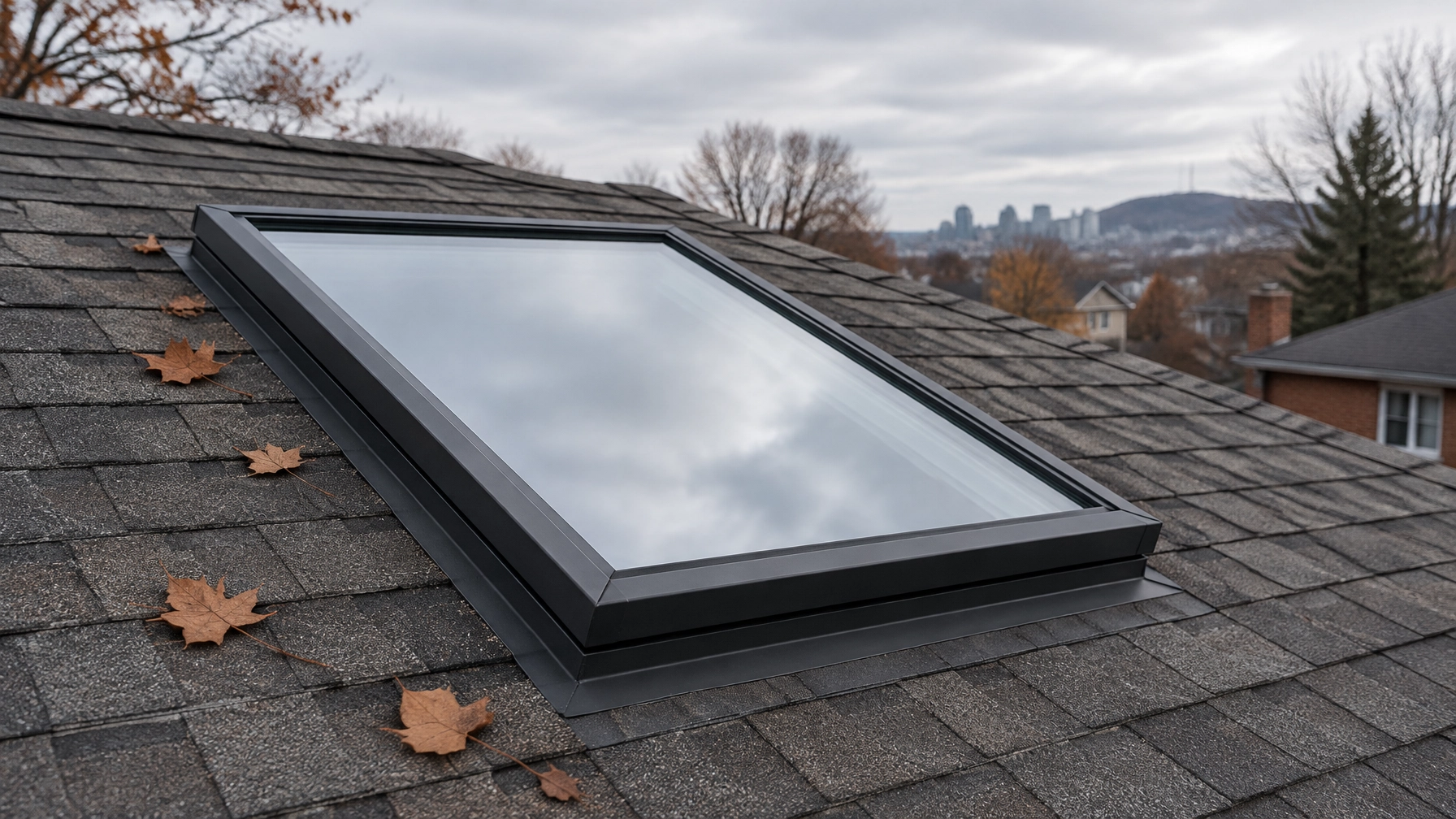
Your skylight used to throw light down the stairwell. Now it looks dull, and you can't remember the last time anyone went up there to look at it.
Before you book anything, work out what you're actually seeing. A grey film on the outside of the glass is dirt. Fog between the panes, a damp ring on the drywall, or a draft around the frame is something else, and no wash will fix it.
Start inside, from the floor
You don't need a ladder to learn a lot about a skylight.
Wait for daylight and look up at the glass. Compare it with a window in the same room. If the window looks clear and the skylight looks cloudy, the difference is usually on the skylight surface.
Then look at the wall and ceiling around the frame. A brown ring, bubbling paint or a soft spot in the drywall means moisture is getting where it shouldn't. That's a repair question before it's a cleaning question.
Look down the shaft, too. Those walls and corners collect dust, insect hulls and cobwebs, and in a light well that dust reads as a grey haze from below.
On a cold morning, check the frame. Natural Resources Canada notes that condensation around skylights can form on the glass, on the frames, near the weather seals, on the walls around the skylight, or between the panes when the seal has failed. Each one points somewhere different.
Why skylights get so dirty
A normal window stands up in the wall and gets rained on at an angle. A skylight lies closer to the roof, so water runs off fast and leaves behind what it was carrying.
Pollen, seed pods, shingle grit, sap and bird droppings land, dry, and stay. By November, a skylight has usually collected a full season of that film. It's one of the few pieces of glass on the house nobody sees up close, which is exactly why it goes years without attention.
Not all of it is ordinary dirt. If a whitish or cloudy patch stays after washing, it may be mineral deposit rather than film. Our guide to hard-water spots on windows explains why that behaves differently.
The real issue is access
Some skylights can be reached from the ground with suitable equipment. Others need access from the roof. The height, slope and location determine what is practical.
That's why it gets postponed. It's also why the job deserves a plan rather than a Saturday improvisation. Roof surfaces in late fall are cold, often damp, and sometimes frosted in the morning. A fall from a roof edge is not a small accident.
Canada.ca's guidance on clearing snow and ice recommends working in pairs or hiring a professional for roof and eavestrough work. The same logic applies to getting up there at all.
Your part is easy. Stay off the roof. You can still gather what a professional needs from the ground and from inside.
What a skylight cleaning covers
The scope depends on access and condition. It may include exterior glass and reachable frames, as well as accessible interior glass. Stanley confirms which surfaces are included when he reviews the job.
Rooftop and skylight cleaning is quoted as an add-on, reviewed for access, height and condition first, then added to the same visit as the rest of the glass so nobody makes two trips.
What cleaning won't do: it won't fix a failed seal, stop water coming in around the flashing, or dry out a wall that is already damp. If you see fog between the panes or a stain spreading on the ceiling, say so when you ask for a quote. It changes what the visit should be, and sometimes the answer is a roofer rather than a cleaner.
Why late fall is the moment
Two reasons, and neither is dramatic.
Light. Montreal in November is grey by four in the afternoon. A dirty skylight shows most in exactly the months when you want the light most.
Timing. Exterior glass is easier to clean safely while the roof is still clear and the temperatures are mild. Once the cold settles in and snow sits on the roof, exterior work depends on the weather and may not be practical at all. That's not a prediction about your roof. It's how the season goes here.
CAA-Quebec's fall maintenance guide puts skylights on the same list as the roof covering, the flashings and the gutters: clean and inspect them in the fall, before winter. If your gutters are being cleared anyway, the skylight is on the same roof and often on the same visit.
For the wider checklist, see our winter window and gutter prep guide.
When it's more than a cleaning
Ask for a closer look if you notice any of these:
- Fog or haze trapped between the panes that doesn't clear from either side
- Water stains, bubbling paint or soft drywall around the frame or on the shaft wall
- Condensation or frost on the frame every cold morning
- Cracked, missing or peeling sealant where the skylight meets the roof
- A skylight that leaks during rain or when snow melts
Some of these belong to a window or roofing specialist. Cleaning the glass is a simpler, separate job, and the two can happen in either order.
What to send when you ask
You don't need to know what's wrong with it.
Tell us how many skylights you have, roughly where they are in the house, and whether the inside is easy to reach. Two photos help more than a paragraph: one looking up from inside, one from the ground showing the skylight on the roof.
Request a quote from Flip et Bulles and include those details. If the inside and outside both need doing, say so, and mention any other windows you want in the same visit. Exterior work depends on the weather and temperature, and Stanley confirms access before anything is booked.